Protein-Dense Foods That Actually Work on GLP-1 (Ranked by Volume Efficiency)
TL;DR
- On GLP-1, the best high-protein foods are the ones that deliver the most protein in the least stomach volume. That matters more than serving-size protein claims when nausea and fullness limit what you can finish.
- A 6 oz chicken breast holds ~50 g of protein but a food’s serving size means nothing if you cannot eat the serving.
- Whey isolate, Greek yogurt, egg whites, and cottage cheese top the density ranking. Fibrous vegetables and bulky whole grains (however “healthy”) work against you when they crowd out protein.
- This article ranks foods by what fits, then shows a sample day hitting 150 g of protein in minimal volume.
The real constraint: it’s not what you eat, it’s what fits
Standard high-protein food lists are written for people with a normal appetite. They rank foods by protein per serving and assume you can eat the serving. On GLP-1, that assumption breaks. The drug slows gastric emptying and suppresses appetite, so your stomach fills faster and stays full longer. The limiting variable is no longer “what should I eat”. It is “what can I physically get down before I feel full or queasy.”
That changes the entire selection problem. The best high-protein foods for GLP-1 are the ones that deliver the most protein in the least volume, because volume is the resource you have least of. A food that is 30% protein by weight is worth more to you than a food that is 20% protein by weight, even if the second food has a higher protein number on its label because the label assumes a portion you may not be able to finish.
Download the free GLP-1 Starter Framework: the three-lever system for losing fat without losing muscle.
How to think about protein density on GLP-1
The metric that matters is grams of protein per gram (or ounce) of food. Call it protein density. A standard food list ranks by protein per serving; you need to rank by protein per unit of stomach space consumed. These produce different orders.
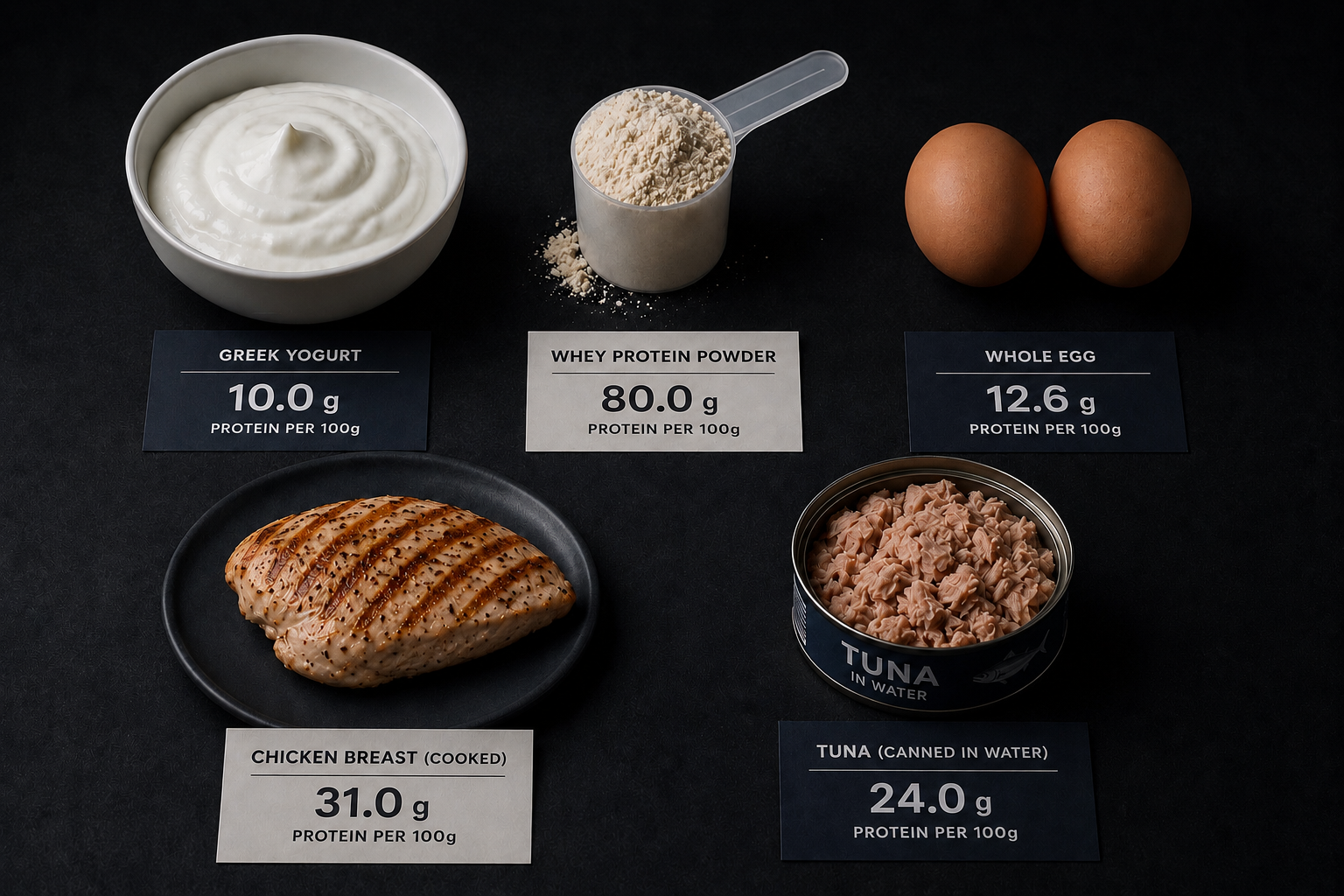
Take two foods. Chicken breast is roughly 31 g of protein per 100 g of cooked meat: dense, but the meat carries real volume and chewing load. Whey isolate is closer to 90 g of protein per 100 g of powder, and mixed into liquid it barely registers as volume because liquid does not trigger fullness the way solid food does. By the protein-per-serving metric, both look fine. By the protein-density-on-GLP-1 metric, whey wins decisively, because it solves the constraint that is actually limiting you.
This reframe matters because it overturns conventional “eat clean” advice. A large salad with grilled chicken is a textbook healthy meal, and a poor GLP-1 meal, because the fibrous greens fill your limited stomach volume with bulk that displaces protein you needed that space for. The salad is not bad food. It is the wrong tool for a volume-constrained body trying to hit a high protein target.
Tier 1: highest density sources (eat these first every meal)
Anchor every meal with these. They deliver the most protein per unit of volume and digestive load:
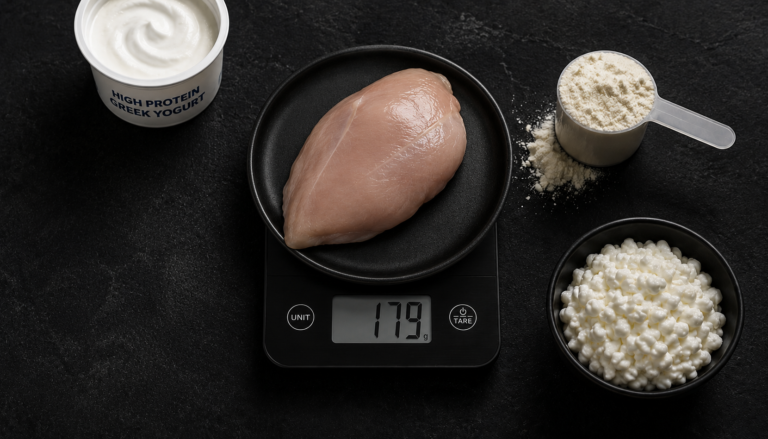
- Whey isolate: ~25 g protein per scoop, near-zero solid volume in liquid; the single most volume-efficient source. The full case for liquid protein as a clinical tool on GLP-1 is covered in the protein shake strategy for GLP-1 users.
- Greek yogurt (2%): ~17–20 g per cup, smooth texture, easy to get down when nausea is present
- Egg whites: ~26 g per cup of liquid whites, minimal volume, no fat or fiber bulk
- Chicken breast: ~31 g per 100 g; the densest solid whole-food source, though chewing load is a factor on bad days
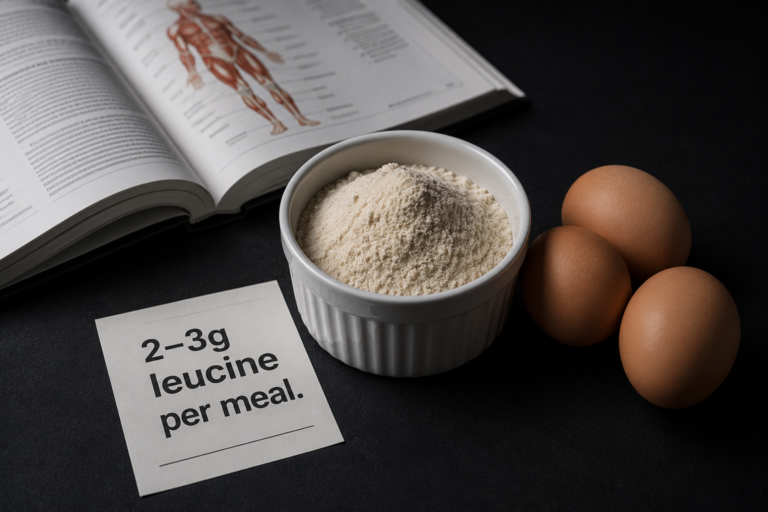
These also rank high on leucine per gram, which means they clear the per-meal synthesis threshold in a smaller portion. A double advantage on a suppressed appetite. The leucine logic is in the leucine threshold and why your daily total isn’t enough.
Tier 2: reliable but lower density
Good foods that carry more volume or fat per gram of protein. Use them, but do not build the whole day on them when appetite is low:
- Whole eggs: ~6 g protein each, but the yolk adds fat and volume relative to whites
- Salmon: ~25 g per 100 g, plus healthy fats; excellent food, moderate density
- Canned tuna: ~25 g per can, very lean, but the texture and volume can be tough on a queasy day
- Cottage cheese: ~14 g per half cup, smooth and tolerable, slightly lower density than Greek yogurt
- Lean beef: ~26 g per 100 g, dense protein but high chewing and digestive load
Tier 3: use to supplement, not anchor
Protein is present, but volume cost is high relative to what you get. These earn a place for variety and micronutrients, not as your protein backbone:
- Legumes (lentils, beans): protein comes packaged with substantial fiber and carbohydrate bulk that fills you before the protein adds up
- Tofu and tempeh: usable plant options, but lower leucine per gram and higher volume per gram of protein than animal sources
If you eat plant-based, you are not stuck: you simply have to accept that hitting the target takes more deliberate planning and often a leucine-dense addition like a soy or pea isolate to clear the per-meal threshold.
Foods that actively work against you on GLP-1
Some genuinely healthy foods are the wrong choice as meal anchors here, purely on volume grounds:
- High-fiber vegetables in large amounts: broccoli, leafy greens, and similar fill stomach volume fast and slow gastric emptying further, displacing protein. Eat them as a small side, not the base of the plate.
- Bulky whole grains: brown rice, oats, and whole-grain bread carry volume that crowds out protein when your capacity is halved
- Carbonated protein drinks: the carbonation expands in a slow-emptying stomach and triggers fullness and discomfort prematurely
This is a volume argument, not a nutrition argument. None of these foods are bad. They are simply the wrong fit for a meal where protein density is the priority and stomach space is scarce. If nausea specifically is the problem, the eating approach overlaps with what to eat for Ozempic nausea.
When my appetite bottomed out in the first weeks after a dose increase, the volume constraint forced an actual swap in my protocol. I had been anchoring dinner on a chicken breast, and through weeks four to six I simply could not finish one. The volume and chewing load were too much on a slow-emptying stomach. So dinner’s anchor became a bowl of Greek yogurt plus a whey shake. Same protein landing in the meal, a fraction of the volume and effort. It was not a preference; it was the only way to keep the protein target intact when solid food stopped fitting. Your tolerances will differ, so treat the specific swap as illustration rather than prescription.
A sample high-density meal plan for 150 g of protein in minimal volume
What 150 g looks like when every choice is optimized for volume:
- Breakfast: 1 cup egg whites + ½ cup Greek yogurt: ~36 g
- Midday: 1.5 scoops whey isolate in water: ~37 g
- Afternoon: ½ cup cottage cheese: ~14 g
- Dinner: 5 oz chicken breast (or yogurt + shake on a low-tolerance day): ~43 g
- Evening: 1 scoop whey or ½ cup cottage cheese: ~20 g
That is ~150 g across five small, low-volume touches: none of them a large plate, most of them tolerable even when appetite is near zero.
Key Takeaway
On GLP-1, rank your protein sources by density (protein per gram of food) not by protein per serving, because stomach volume is the constraint that actually limits you. Anchor every meal with Tier 1 sources: whey isolate, Greek yogurt, egg whites, and chicken breast. Treat fibrous vegetables and bulky grains as small sides, not bases, because their volume displaces the protein you have limited room for. The goal is maximum protein in minimum space, and once you select food by that rule, hitting a high protein target on a suppressed appetite stops feeling impossible.
Download the free GLP-1 Starter Framework: the three-lever system for losing fat without losing muscle.
The GLP-1 Nutrition Planning Framework ($17) covers protein targets, deficit management on suppressed appetite, injection day adjustments, and a 12-week tracking spreadsheet for logging it all.
FAQ
What are the best high-protein foods for GLP-1 nausea?
Smooth, low-volume, high-density sources tolerate best when you feel queasy: Greek yogurt, whey shakes, cottage cheese, and egg whites. They deliver a large protein dose in a small, easy-to-swallow volume without the chewing load or bulk of meat or fibrous vegetables. Cold or room-temperature options often sit better than hot, strong-smelling foods during a nausea window.
Why can’t I just eat chicken and vegetables on semaglutide?
You can, but a large plate of chicken and vegetables is high-volume, and on GLP-1 your stomach fills before you finish it, so you under-eat protein. The vegetables in particular displace stomach space without adding meaningful protein. Keep the chicken, shrink the vegetable portion to a small side, and add a denser protein source to make up the target.
How do I get enough protein when I feel full after a few bites?
Switch to liquid and semi-liquid sources, which bypass the fullness signal that limits solid food. A whey shake delivers 25 g+ of protein in a volume your stomach barely registers. Spread small, dense feedings across the day rather than attempting full meals, and anchor each with a Tier 1 source so even a few bites or sips count.
Are protein bars good for GLP-1 users?
They are convenient but usually mediocre on density and often heavy on sugar alcohols that can worsen GI symptoms on a slowed digestive system. If you use them, pick high-protein, low-sugar-alcohol options and treat them as backup, not a primary source. A whey shake is more volume-efficient and gentler on a sensitive gut.
Should I avoid carbs and vegetables completely to fit more protein?
No. Protein is the priority on a constrained appetite, but you still need carbohydrates for training energy and vegetables for micronutrients and gut health. The point is portion order, not elimination. Anchor the meal with dense protein first, then add a small amount of carbohydrate and vegetables with whatever volume you have left.
Nothing on this site constitutes medical advice. I’m not a physician, and this blog documents my own research and experience. Consult a qualified healthcare provider for decisions about medication, dosing, or treatment.
Ryan Mercer | MetabolicMale.com | ryanmercer@metabolicmale.com
Citations:
- Norton LE, Layman DK. Leucine regulates translation initiation of protein synthesis in skeletal muscle after exercise. J Nutr. 2006;136:533S–537S.
- Jager R et al. International Society of Sports Nutrition Position Stand: protein and exercise. J Int Soc Sports Nutr. 2017;14:20.